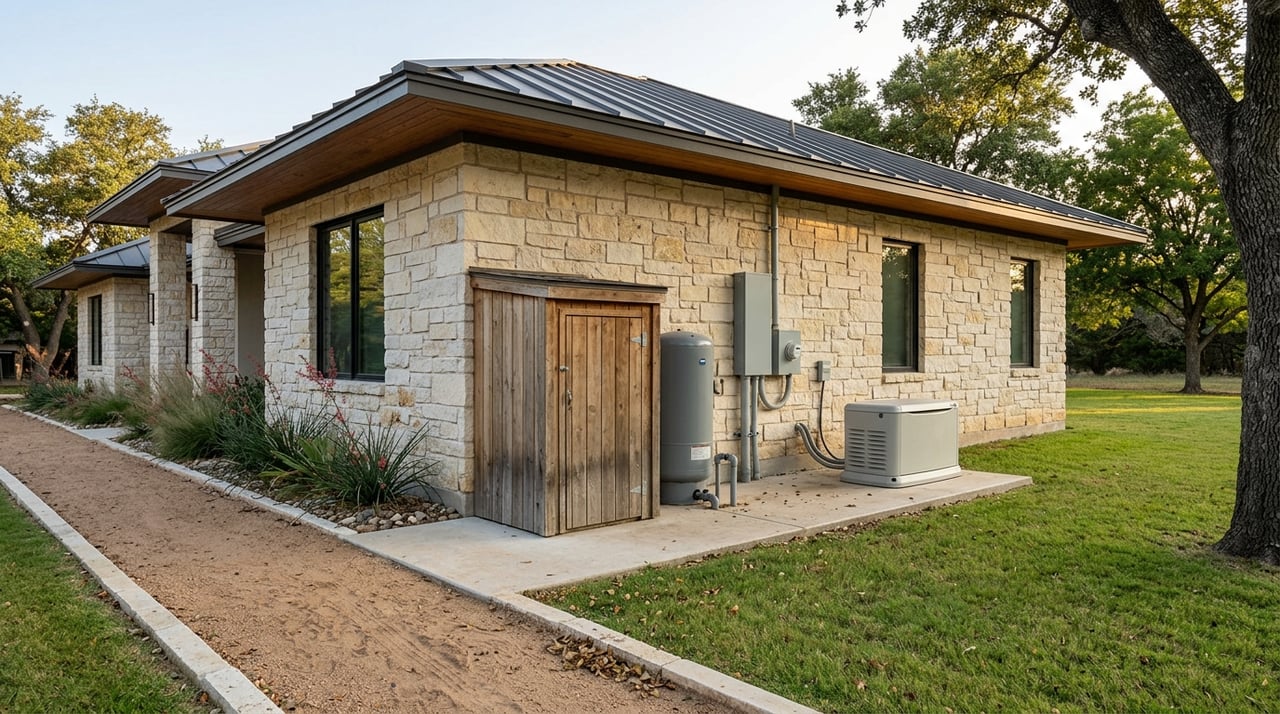
Buying acreage in Hill County can feel simple until you start asking the practical questions. Where will your water come from? Is there a working septic system? Can you get electric service and reliable internet at the exact tract you want? If you want to avoid surprises after closing, it helps to understand the utility and infrastructure basics before you buy. Let’s dive in.
Why utilities matter on Hill County acreage
With rural property, the land itself is only part of the story. A beautiful tract may still need more research if water, septic, electric access, or driveway approvals are not already in place.
Hill County’s subdivision rules show just how important these details are. Utility planning may involve the water source, sewage-disposal plans, utility providers, utility easements, and in some cases both county and city ETJ rules, with the stricter rule applying.
That does not just matter for developers. As a buyer, you can use those same standards as a smart due diligence checklist when you evaluate acreage.
Start with the water source
One of the first things to confirm is how the property gets water. In Hill County, that could mean municipal water, a rural water supply corporation, a privately owned water system, or an individual well.
The county expects a utility plan to identify the water source and include approval from the supplier or municipality showing water is available for minimum domestic needs. Even if you are not buying a newly divided tract, that gives you a clear framework for what to verify.
Questions to ask about water service
Before you move forward, ask:
- Is the tract served by municipal water, rural water, or a private well?
- Who owns the water line?
- Where is the meter or wellhead located?
- Is there written confirmation that service is available?
- If there is a well, when was the water last tested?
These answers can shape both your upfront costs and your long-term maintenance responsibilities.
Private wells require extra attention
If the property relies on a private well, you will want to take a closer look. Hill County is within the Prairielands Groundwater Conservation District, which provides local well registration, permitting, and well-owner resources.
That matters because a private well is not just a feature on the property. It may come with local groundwater-district rules, plus ongoing testing and maintenance that become your responsibility after closing.
What to know about Texas well rules
Texas requires a licensed driller and pump installer for well drilling and pump installation. If a tract needs a new well, that is not a do-it-yourself project.
Texas A&M AgriLife’s Texas Well Owner Network also says private-well owners are responsible for their own drinking water. Its guidance recommends testing at least once a year for total coliform bacteria and nitrate, along with baseline testing when conditions warrant it.
Check for old or abandoned wells
Older acreage can come with wells that are no longer in use. According to TDLR, abandoned or deteriorated wells can create a groundwater hazard, and the landowner of record is responsible for plugging the well or bringing it into compliance.
That means an old well is not just a forgotten feature in the back corner of the property. It can become a real cost and compliance issue, so it is worth identifying before closing.
Septic can be a major surprise
For many Hill County acreage buyers, septic is where the biggest surprises show up. If a property is not connected to a public sewer system, you need to know whether there is an existing on-site sewage facility, also called an OSSF, and whether it fits your intended use.
TCEQ says an OSSF must be based on a site evaluation. Before a system is constructed, installed, altered, extended, or repaired, the site must be evaluated by a licensed site evaluator or licensed professional engineer.
What buyers should verify about septic
Ask for clear details on:
- Whether there is an existing septic permit
- Where the drainfield is located
- Where the reserve area is located
- Whether the system is on a maintenance contract
- Whether the current system matches how you plan to use the property
A system that worked for a smaller household or lighter use may not fit your plans if you expect more occupancy or different improvements.
Hill County septic timing matters
Hill County’s current OSSF page says Development Services handles OSSF permit payments and coordinates inspections as of January 1, 2026. It also notes that commercial-use or RV-park septic permits need TCEQ approval too, which can delay authorization to construct.
For a typical acreage buyer, the takeaway is simple. Do not assume septic work will be quick, and do not assume an older system automatically meets your future plans.
Septic maintenance after closing
Maintenance rules can vary by system type. TCEQ notes that some aerobic, secondary-treatment, drip-irrigation, and surface-application systems may be homeowner-maintained after two years, but local permitting authorities can impose stricter requirements.
If you buy acreage with one of these systems, notify the permitting authority after closing and ask about startup procedures. That one step can help you avoid confusion about maintenance expectations.
Electric service should be confirmed by parcel
Do not assume that nearby power lines mean easy electric service. HILCO Electric Cooperative says it serves Hill County, and its service territory is defined by a certificate of convenience and necessity.
For buyers, the practical move is to confirm service by parcel. You also want to ask whether the site already has a meter base, service drop, or any new-service requirement.
Ask specific electric questions
When you are evaluating a tract, ask:
- Does HILCO serve this parcel?
- Is there an existing meter base?
- Has a service drop already been installed?
- Will new service require additional work or coordination?
Those details can affect both your budget and your move-in timeline.
Internet and cell service need address-level checks
Reliable internet is no longer optional for many buyers. Whether you work from home, stream often, or simply want dependable service, this is one item to verify before you close.
The FCC’s National Broadband Map is a useful starting point because it reports fixed internet options at the address level, including fiber, cable, DSL, satellite, and fixed wireless. FCC guidance also notes that mobile coverage is modeled for outdoor or in-vehicle use, and real-world indoor performance can vary with terrain.
Why exact-lot verification matters
On acreage, service can change from one property to the next. A nearby address may have different options than the tract you are buying.
That is why it is smart to verify both internet and cell service for the exact lot. If the map data does not look right, FCC guidance notes that inaccuracies can be challenged.
Access, easements, and drainage affect usable land
Acreage buyers often focus on the size of the tract, but the usable footprint may be shaped by infrastructure limits. Hill County’s subdivision ordinance highlights several issues that can change how you use the property.
Utility easements may be required. Driveway culverts need county approval. Floodplain construction is restricted. Private drives or easements remain the owner’s responsibility.
Why surveys and title review matter
This is one reason a current survey and title review are so important. They can help you spot easements, access issues, and other restrictions that may not be obvious when you first walk the land.
A quick conversation with the county about access and drainage can also be valuable. On rural property, these practical details can matter just as much as the views.
A practical due diligence checklist
If you are considering Hill County acreage, keep this checklist handy before you close:
- Confirm the water source
- Ask for water-availability documentation if applicable
- Verify whether the tract has a private well and whether it is registered or subject to local rules
- Ask when well water was last tested
- Confirm whether there is an existing septic permit
- Identify the drainfield and reserve area
- Check whether septic maintenance contracts apply
- Verify electric service by parcel with the provider
- Check internet options at the exact address
- Review the survey and title work for easements
- Ask about floodplain limits, driveway culvert approval, and drainage
- Look for old or abandoned wells on the property
This kind of research helps you make a confident decision based on the property’s real setup, not assumptions.
The value of local guidance
Acreage purchases usually involve more moving parts than a typical in-town home purchase. Water, septic, access, and utility questions can all affect cost, timing, and how you use the land after closing.
That is why local knowledge matters. When you have someone helping you ask the right questions early, you are better positioned to avoid costly surprises and move forward with confidence.
If you are exploring Hill County acreage and want practical guidance on what to verify before you buy, Cherie Laake can help you navigate the details with a personalized, local approach.
FAQs
What water source should you expect on Hill County acreage?
- Hill County acreage may have municipal water, rural water service, a privately owned water system, or a private well, so you should confirm the exact source before closing.
What should you check about septic on a Hill County acreage property?
- You should verify whether there is an existing septic permit, where the drainfield and reserve area are located, whether there is a maintenance contract, and whether the system fits your intended use.
Who handles septic permitting in Hill County?
- Hill County’s current OSSF information says Development Services handles OSSF permit payments and coordinates inspections as of January 1, 2026.
Why should you verify electric service by parcel in Hill County?
- Electric service should be confirmed by parcel because service territory and connection details can vary, and you may need to verify whether a meter base, service drop, or new-service setup is required.
How can you check internet availability for Hill County acreage?
- A good starting point is the FCC’s National Broadband Map, which shows fixed internet options by address, but you should still verify service for the exact lot before closing.
What infrastructure issues can affect how you use Hill County acreage?
- Easements, floodplain restrictions, driveway culvert approvals, drainage issues, private access responsibilities, and abandoned wells can all affect the usable footprint of the property.